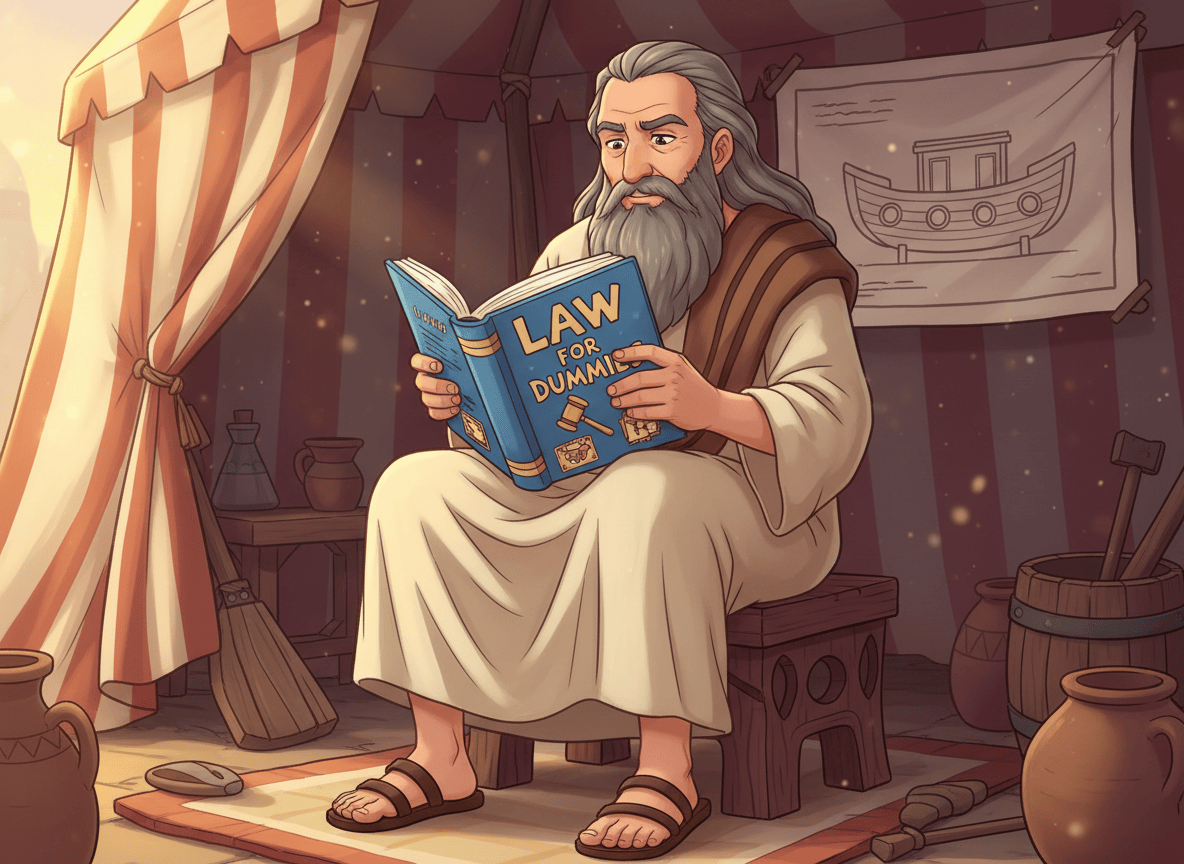
The Torah Portion Noah provides unique insights into the Decalogue. Unlike the Ten Commandments’ “thou shalt not murder,” the Portion Noah’s homicide prohibition statute is complete. The restricted activity, the punishment, and the rationale are all present. Given that the Portion Noah’s statute evokes God’s image within its reasoning, theological questions arise. Thus, the Noah portion’s law includes theological matters that bring some bearing upon understanding the Ten Commandments.
The Portion Noah
In the Noah Portion, after the Lord blessed Noah and his sons, God advises them as follows: “I shall inquire for a human’s life from the hand of each man for his brother. One who sheds a human’s blood: by a human his blood will be shed, because He made the human in the image of God.” Genesis 9:6.
While the act, the punishment, and the rationale are all included within the statute, the fact of God’s Image is noted by not addressed with specificity. Thus, a focal issue of this post is the law’s interpretation. It clearly differs from the Ten Commandments’ law which simply states: “[Y]ou shall not murder.” Exodus 20:13.
Interpretation
The first interpretation issue concerns the parties. Is this statute concerning familial relations? Or, was it meant to include others? In essence, was the passage specifically referring to siblings or was it intended to be generally applied? Given that Noah’s children and their families were the only survivors of the flood, the implication is that it meant moving forward to include all humans.
The next issue is the act. In Friedman’s Commentary on the Torah, the spilling of the blood, in this instance, indicates that it was forbidden to unlawfully take a human life. Supra at P. 42. As such, the statute is about murder and not the accidental taking of a life.
The next issue is the rationale: what exactly does it mean that a human was made in God’s image?
The Rationale
“He made the human in the image of God” begs the questions: which human are we talking about? The murderer or the victim? Or, is it both?
The law’s rationale involves looking at multiple perspectives. One view is that humans-being in the Lord’s image- are to be protected. With God as the creator, a human life lost is comparable to a parent losing a child.
The act of murder, however, involves two individuals; each one is made in God’s image. Is there something about the one committing the act that is related to God’s image?
To answer this question, the Torah’s first homicide must be revisited. A passage in Bereshit speaks towards human’s moral and mental faculties. God, in dealing with Cain, tried to calm him down. He spoke to Cain about doing better; he essentially advised him that dwelling on one’s failure leads to problems. Genesis 4:6-7. Cain proceeded to ignore the the advice and took his brother Abel’s life. From this passage, one can imply that God’s image included the capacity for moral and mental fortitude.
The perpetrator is tied the concept of human moral failure. Murderers are people created in God’s image possessing a moral defect; a problem with discernment. This human is essentially a parental issue: they are God’s troubled child.
Thus, the Image of God concept therefore goes beyond a physical likeness- the mini . It encompasses moral reasoning and intellect. God’s interest likely extends to both individuals. The law was arguably intended to both shape minds and protect lives.
Conclusion
The Portion Noah’s homicide statute is far more complete than the one in the Decalogue. The offense, the punishment, and the rationale are all present. This completeness allows for analysis which leads to the law’s theological basis. The statute’s rationale offers up many insights into humans created in God’s image. The theological divine concern raises questions. Is the statute merely concerned with God’s image as far as the loss of life? Or, is God’s image impacted by the murderer’s moral defect? Or, are both the loss of life and moral failure Godly concerns? There is a strong case that the Lord has interests with respect to both.
Please like, follow, comment or share

