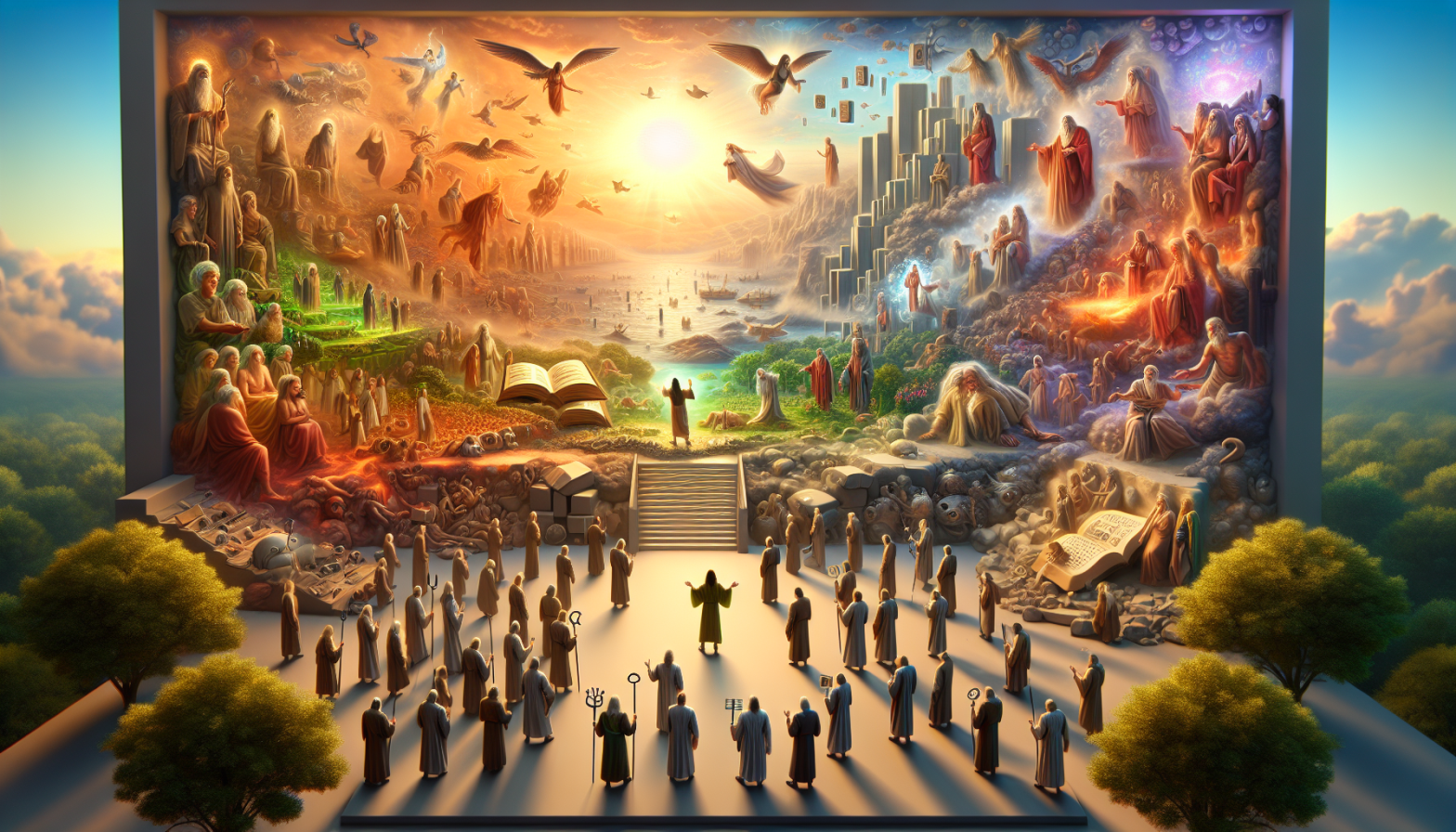
“Who is in charge?”
“Who is not?”
The Hebrew Bible includes much content addressing the relationship between God and Humanity. With the Ten Commandments, a covenant between a deity and the Children of Israel was established. With this covenant, the deity- authority- propounded directives upon the people. These directives- th Decalogue- were further expanded upon within the Torah with additional instructions.
In the Torah Portion Acharei, both of Aaron’s sons die. The reported cause of death was that they “drew near before the Lord and died.” Leviticus 16:1.
Certainly, this is shocking way to die. It appears patently unfair that the mere proximity to a deity’s space would be the source of their demise? Does this tragedy mean something far greater?
To answer this question, it is incumbent to explore the Book of Genesis. In the Garden of Eden, the snake said to the woman, “God knows that in the day that you eat from it [the tree of knowledge of good and bad] your eyes will be opened, and you’ll be like God–knowing good and bad.” Genesis 3:4.
With the Tower of Babel tale, the residents embarked on a massive structure intending upon making themselves a “name”. Genesis 11:4. The Lord put an end to the project by confusing them and thereby destroying their cohesiveness and unity. Genesis 11:4.
Thus, one can assert that the Torah presents that there is an intended barrier between the Lord and Humans. The actions taken in all three stories illustrate the extend that the Lord will partake maintain the distance.
With Adam and Eve, they were expelled from the Garden of Eden and were subjected to mortality. With Babel, the only “name” would remain that of the Lord. With Aaron’s sons, they trespassed in a location reserved for the deity. Certain spaces would be off limits.
Knowing good and evil, having “the” name, and occupying a holy location are matters reserved for the deity. They all serve as reminders that a barrier between Human and God.
This barrier is a cautionary measure as to authority. Humans’ authority was to be limited. it was to be subject to an ultimate authority. This ultimate authority transmitted to his subjects the core morals and values. The product of this tranmittal being the Torah.
In sum, as the Ten Commandments established a covenant between a deity and a people, the Torah elaborates on this concept to express the need for a barrier to exist between the two. The death of Aaron’s son is a reminder of this barrier. This boundary touched on matters such as the deity’s name, an individual’s existentiality and in the structure within moral authority.
Be well!!
Please like, follow, share or comment.
 The Ten Commandments Project