
Who will live, and Who will die Yom Kippur’s Torah Portion is the goat on randomness. What should we take away from the universe filled with uncertainty? Yom Kippur- the Day of Atonement- is a moment in which life’s uncertainty is brought to the forefront. It is done with the reading of one of theContinue reading “Institutionalized Randomness: The Goat, A Yom Kippur Thought”
Category Archives: biblical literacy
Ha’Azinu’s Ten Commandments’ Moment

These go to eleven Nigel Tufnel Moses, in the Ha’Azinu Torah Portion, lectures to the Children of Israel their covenantal responsibilities. In his speech, Moses raises parental responsibilities of the requirement to teach their progeny the commandments. While the Decalogue served as a Community Code of Conduct, the Commandments did not fully lay out theContinue reading “Ha’Azinu’s Ten Commandments’ Moment”
In Abstentia: Nitzavim

We were all at Mt. Sinai To fully understand the Ten Commandments, one must not only explore the law, but also the spirituality attached to it. Legally, the Decalogue presents as a contract; a covenant. With contracts, there are parties. The Ten Commandments’ two parties are God and the Children of Israel. These two areContinue reading “In Abstentia: Nitzavim”
The Bigger Picture: Ki Teitzei

What is the Torah’s Big Picture? The answer can be achieved by making sense of a one particular perplexing commandment from the Torah Portion Ki Teitzei. Before doing so, one must understand that the Pentateuch, some opine, was intended to be a nation’s law. To accomplish this goal, the Torah is crafted with commandments thatContinue reading “The Bigger Picture: Ki Teitzei”
Thou Shalt Not Procrastinate? Ki Teitzei

Is procrastination a commandment violation? The Torah Portion Ki Teizei addresses this put-off subject tied to the Decalogue. In a passage exploring the significance of the passage of time, the Ten Commandments becomes relevant. Beyond excoriating the usual suspects- all of us who delay fulfilling commitments, the Torah implores people to do one of theContinue reading “Thou Shalt Not Procrastinate? Ki Teitzei”
A Biblical Literacy Moment: The Prophet Defined
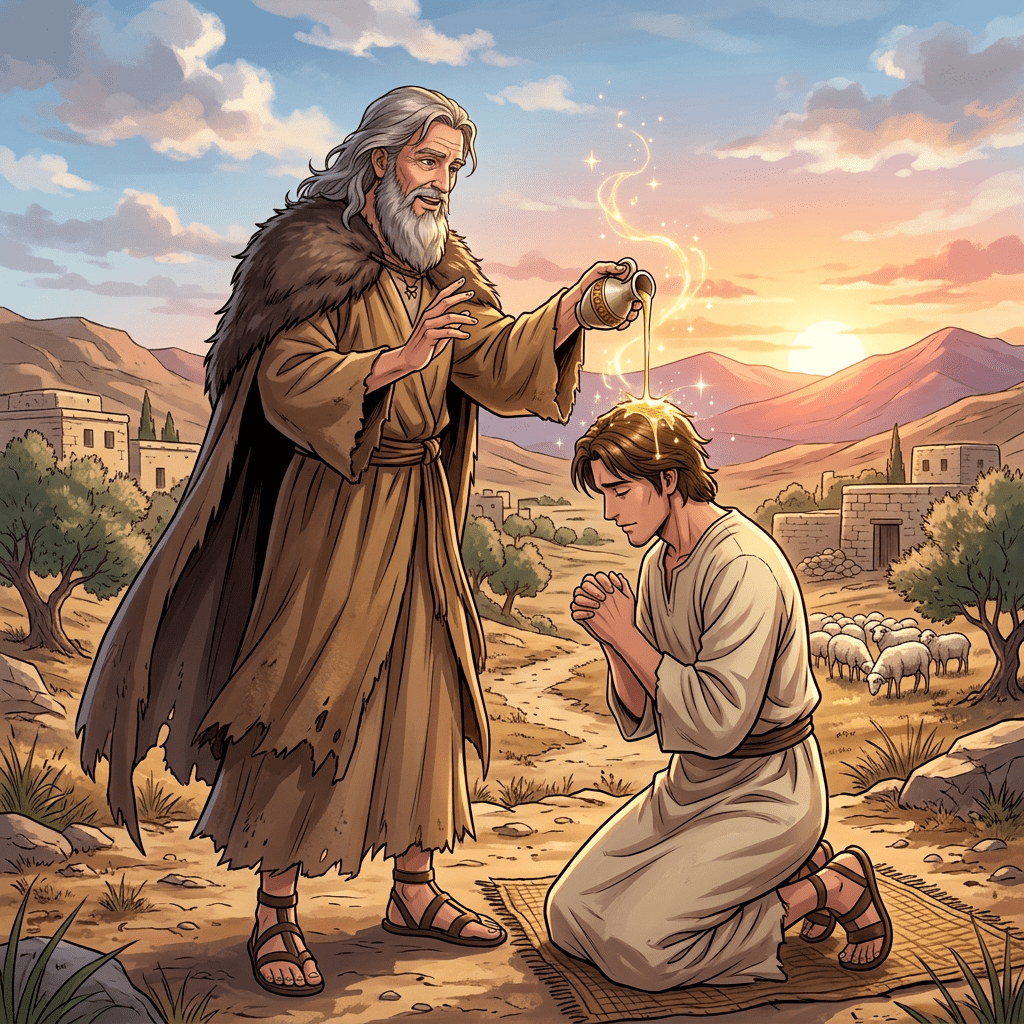
The prophet’s role is revealed in the Torah Portion Shoftim. Moses evokes Mt. Sinai’s fireworks and the Ten Commandments to explain one of the prophet’s essential duties. With this, Moses also introduces a qualifying requirement for the position. To appreciate Moses’ retelling of what transpired at Mt. Sinai, a reading of Exodus’ contemporaneous account isContinue reading “A Biblical Literacy Moment: The Prophet Defined”
Re-eh: The Realities of Reality

Brother, can you spare a dime? Bing Crosby Truth, justice and righteousness are the cries of the Hebrew Bible Prophets. Jeremiah 4:2. Committing a righteous act, sometimes, isn’t easy. This is particularly the case when it comes to a troubling Torah Portion Re-eh Commandment concerning indigency. Addressing an indigent’s needs proves quite problematic with theContinue reading “Re-eh: The Realities of Reality”
The False Prophet: A Biblical Literacy Moment

False prophets? How do we know? The Torah Portion Re’eh defines a false scriptural prophet. Not only does Re’eh address the deity-prophet relationship, but it also addresses the biblical concepts of both testing as well as an individual’s heart. Given the multitude of issues raised within the passage, understanding the prophets’ bona fides within theContinue reading “The False Prophet: A Biblical Literacy Moment”
Who Is He? Definitions: Eikev: A Ten Commandments’ Moment

The Ten Commandments, being a contract, identifies the parties. In the Decalogue, “I am the Lord, your God” is the party of the first part, and the party of the second part are the individuals he brought out from the Land of Egypt. Exodus 20:2 Give this limited description of the part of the firstContinue reading “Who Is He? Definitions: Eikev: A Ten Commandments’ Moment”
A Biblical Literacy Moment: Deuteronomy 8:3

The phrase Man does not live on bread alone is not only a classic, it’s biblical. The line is part of a theologically deep passage that was so significant that it was even referenced in later scripture. Additionally, the well-crafted English translation has taken a life of its own. It connotes a different meaning withinContinue reading “A Biblical Literacy Moment: Deuteronomy 8:3”

