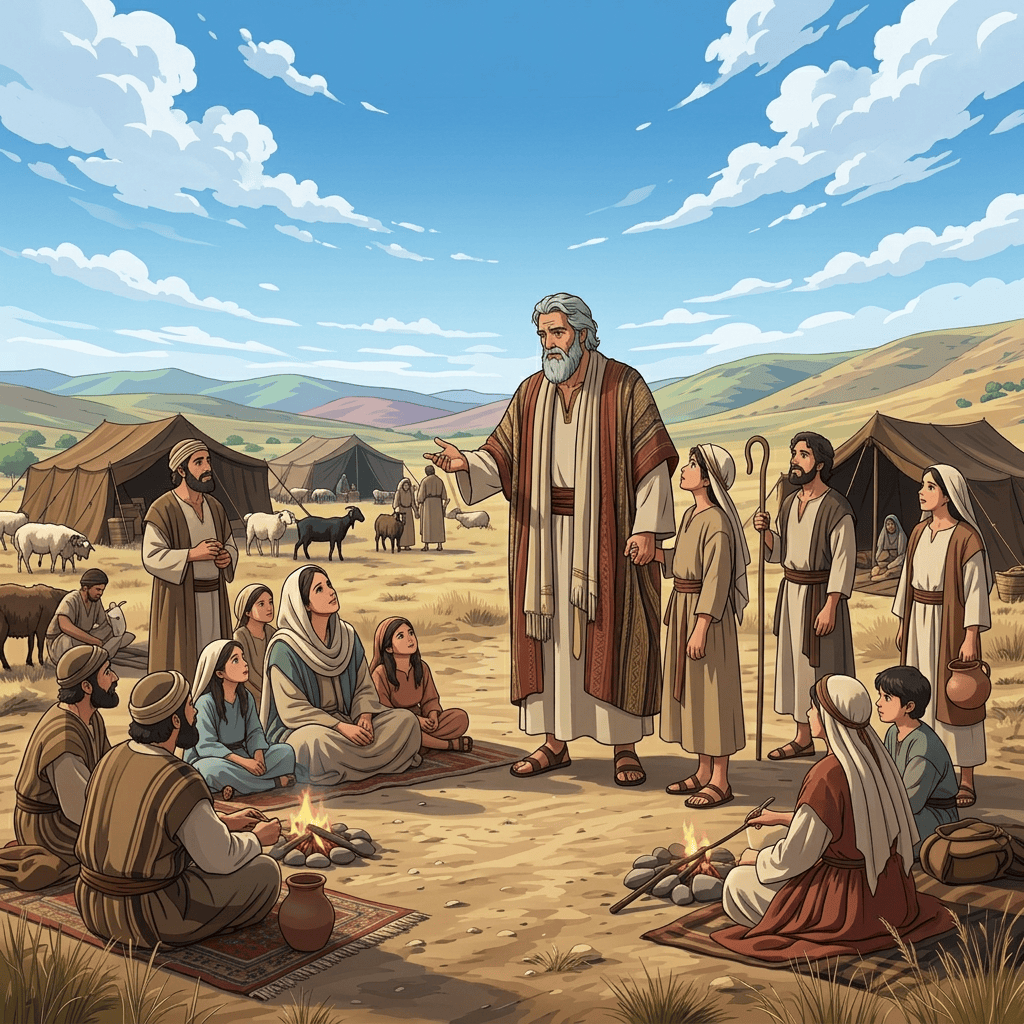
During the holiday season, sometimes we have to be the “bigger” person.
Being largesse is often necessary during the High Holiday season. Rosh Hashanah- the New Year- and Yom Kippur- the Day of Atonement- often come with close encounters of the uncomfortable kind. This especially happens on neutral grounds; synagogues and places of worship. Frankly, with reserved seating, there is no place to hide.
Lingering controversies, legitimate or petty grievances, and innocent misunderstandings lead up to instances of fight or flight. Does one engage and take the moment for reconciliation or does one do their best job to exit stage right. In many instances, taking a deep breath and getting a little bigger can help. This methodology is imparted in one of the stories told in Rosh Hashanah’s first day Torah Portion.
Getting Big
Beyond the seminal tales of Sarah’s conception, Isaac’s birth, and Ishmael’s divine wilderness encounter, there is a water well tale. Ironically, this is perhaps the most practical story ever told for the holiday.
To both understand and appreciate this, we must take a dive into Abraham’s problem with Abimelek.
The Well Tale
Abraham’s encounter with Abimelek, a Canaanite local, was about valuing and maintaining relationships.
Abraham had a problem. He was developing a reputation of being a stand-up person in Canaan. The story tells of Abraham being heaped praise by the locals. Both Abimelek, and Abimelek’s army commander Phichol, lauded Abraham. They told him: “God is with you in everything that you do. And now, swear to me here by God that you won’t act falsely to me and to my offspring and to my posterity. Like the kindness that I’ve done with you, you’ll do with me and with the land in which you resided.” Genesis 21:22-23.
In the midst of these accolades, there was something on Abraham’s mind. There was a problem concerning a water well. Abimelek’s servants had seized Abraham’s water well. It was an important matter that needed to be addressed. Abraham took the moment to bring it to his friends’ attention.
The Problem
An inquiry into the property dispute would be problematic. Accusations would be launched by both parties. One can easily anticipate that those from Abimelek’s camp would claim that it was their well. In turn, Abraham would likely present individuals who either dug the well or witnessed its digging. Further, Abraham’s God was also an issue. The dispute had the potential of negatively impacting his deity’s reputation.
The only certainty in the dispute is that it would be messy. No matter who prevailed, there would be ongoing and long-term distrust between the parties.
Abraham, seeing the dispute as a no-win situation, took a different approach. To resolve the uncertainty concerning the well’s ownership, Abraham provided compensation to Abimelek. Abraham gave him seven ewes. This property exchange served as evidence of who dug the well and who had ownership of it. In essence, Abraham created fair and positive resolution to the dispute. Sometimes, peace has a price.
Conclusion
Whoever thought to include the well story as part of the Rosh Hashanah Torah Portion must be commended. For some, it is the exact message that is needed to bring in holidays. Sometimes, one needs to be the bigger person.
Being a bigger person, however, does not necessarily mean a surrender. Rather, the approach can challenge one’s creativity. It is possible to transform an uncomfortable situation into a positive one. With Abraham, he used compensation- livestock- as a means of creating evidence via legal fiction as to who dug the well. This approach avoided an unnecessary tribunal in which it was likely that the truth would be a casualty and bad feelings would linger.
Happy Holidays, and be well!!
Please like, follow, comment or share

