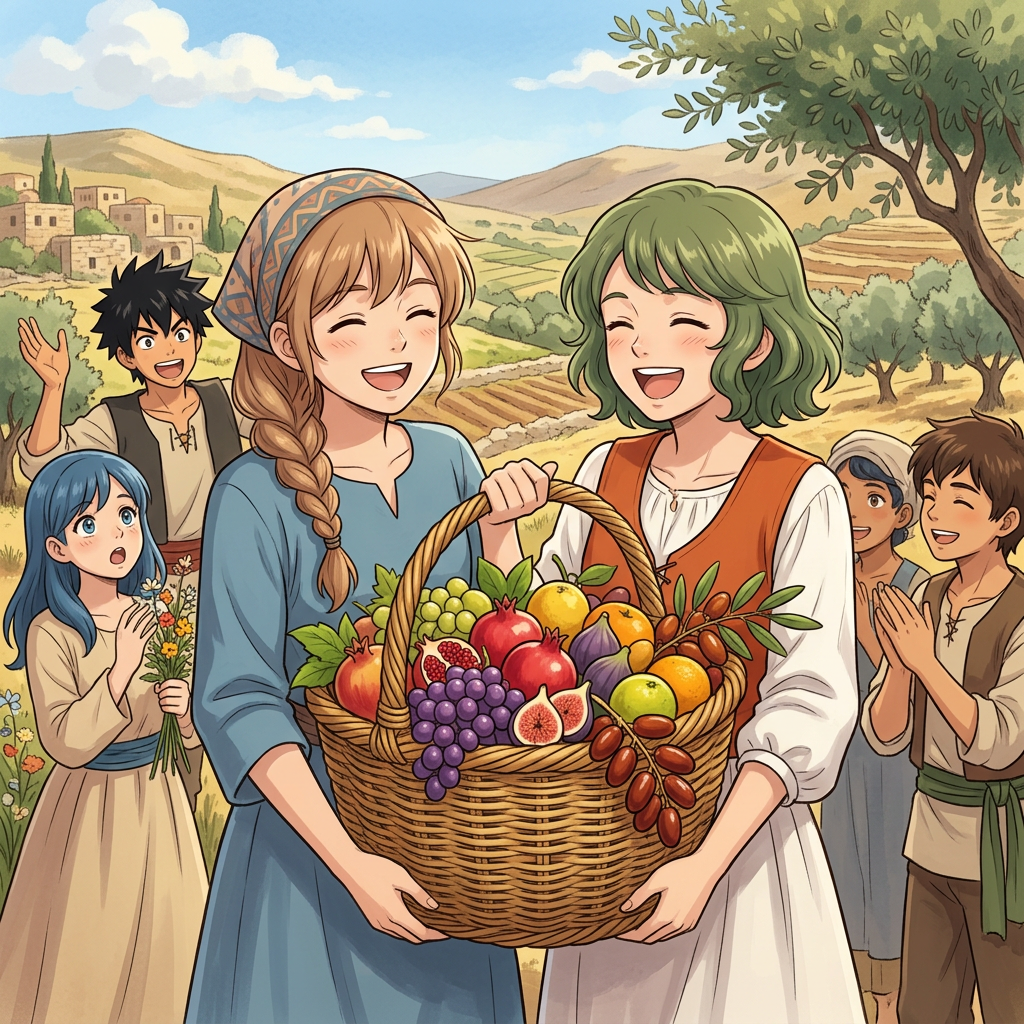
Deuteronomy’s Garden of Eden connection is undeniable. The Torah’s beginning and ending theologically converge in Ki Tavo’s fruit-filled moment. A particular Ki Tavo commandment addresses an ultimate Torah issue. It brings a greater understanding of God’s role with humanity. In the end, Ki Tavo breathes new understanding into the Tree of Knowledge of Good and Bad.
The Deuteronomy-Genesis Connection
Scholars and Theologians recognize Deuteronomy’s connection to Genesis’ Garden of Eden. Rabbi David Wolpe, in Making Loss Matter, notes that Moses, in his Deuteronomy speech, employs tropes recalling the Garden of Eden. Supra at P. 37. Moses, however, goes beyond tropes in his valedictory. He speaks of facts; facts connecting the Promised Land entry to the Garden of Eden.
Similarities
There are many comparisons between Deuteronomy’s Children of Israel and Adam and Eve.
In Deuteronomy, the Children of Israel await entry into their divinely promised land. Deuteronomy 1:8. In Genesis, Adam and Eve are placed into a divinely created garden. Genesis 2:15.
In Deuteronomy, the Children of Israel’s descendants, who are about to enter the promised land, are described as individuals not knowing good from bad. Deuteronomy 1:39. In Genesis, Adam and Eve, as well, didn’t know good from bad. Genesis 3:6-7
Deuteronomy tells of the Children of Israel’s clothing never wearing out during the wilderness wandering. Genesis tells of Adam and Eve unbothered while living a life of nakedness. See Deuteronomy 8:4; Genesis 2:25.
Finally, the Torah tells of the Children of Israel’s divinely provided food source- manna- as one subject to rules. [No gathering on the Sabbath. Exodus 16:22-23] In Genesis, Adam and Eve are given a whole garden to eat subject with one limitation. The fruit from the Tree of Knowledge of Good and Bad. Genesis 2:16-17.
These comparisons bring us to Torah Portion Ki Tavo’s first fruit commandment.
Ki Tavo’s Commandment
The Commandment, which includes a ritual ceremony, is quite extensive. The following is part of it:
“And it shall be, when you’ll come to the land that the Lord, your God, is giving you as a legacy, and you’ll take possession of it and live in it, that you shall take from the first of all of the land’s fruit that you’ll bring in from your land that the Lord, your God, is giving you, and set it in a basket and go to the place that the Lord, your God, will choose to tent His name there…And the priest shall take the basket from your hand and set it down in front of the altar of the Lord your God….And you shall set it down in front of the Lord, your God, and bow in front of the Lord your God. And you shall rejoice in all the good that the Lord, your God, has giving to you and to your house, you and the Levite and the alien who is among you.” Deuteronomy 26:1-11
Commandment Analysis
Arguably, from this Commandment, it is understood that God is goodness’ source. Thus, it is proper that he is initially acknowledged. The first fruit offering is this act of acknowledgment. Impliedly, one must recognize God in order to understand goodness.
The first fruit commandment, however, is not merely about knowing good. The ceremony includes a ritual recalling of what is bad. Bad, for the Israelites, was the acts of the Egyptians. This bad included degradation and imposed hard work. Deuteronomy 26:6 [Note: This part of the passage was omitted from the top for initial brevity.]
The takeaway from this is that God is the source of goodness while human behavior is the source of badness.
The Commandments nature, depth and ritual reflects upon the harvest season’s importance within Israelite culture. This leads to the question as to whether there was some other purpose to connect the commandment to the Garden of Eden tale.
A Promised Land Polemic Tale?
Was the Garden of Eden’s forbidden fruit tale something embraced as a Promised Land polemic? During harvesting season, a tale of eating the forbidden fruit would have given a valued caution for those handling the season’s first fruits. Did the tale help refrain workers and allow for growers to gather the first fruits? The fact that these fruits were required to be brought to the Lord’s altar [Temple] tells of the Commandment’s heightened nature.
Did it serve this purpose?
Conclusion
Deuteronomy’s Children of Israel connection to Adam and Eve explains the Torah’s fruity mystery. Both groups have forbidden fruits. While the taking of the fruit by Adam and Eve imbued them with the knowledge of good and bad, the first fruit process serves to remind the Children of Israel what is good and bad. For the Children of Israel to understand it, they went through a commandment ritual. The first fruit ritual acknowledged God as their authority and as to the basis of good and bad. The Children of Israel are to understand that God’s creations were the source of good while it was humanity’s actions that was the source of bad.
Theologically, this reveals of the deity’s primacy. Analogously, the nature of the fruit from the Tree of Good and Bad was that it was the first fruit of the garden. The reader is never told as to whether Adam and Eve ever consumed any other fruit within the garden! The forbidden fruit may have been their first fruit! The Commandment also serves as a reminder that before enjoying creation, there is the need to acknowledge the creator.
Be well!!
Please like, follow, comment or share


One thought on “Forbidden Fruit? Ki Tavo”