
Deuteronomy’s Garden of Eden connection is undeniable. The Torah’s beginning and ending theologically converge in Ki Tavo’s fruit-filled moment. A particular Ki Tavo commandment addresses an ultimate Torah issue. It brings a greater understanding of God’s role with humanity. In the end, Ki Tavo breathes new understanding into the Tree of Knowledge of Good andContinue reading “Forbidden Fruit? Ki Tavo”
Category Archives: deuteronomy
Moshe’s Ten Commandments

The mind-boggling part of the Ten Commandments is the multitude of versions. In Hebrew alone, there is the original Exodus version, the Deuteronomy version, and even a Dead Sea Scrolls version. In English translations, there are quite a number. Translated versions are driven for multitude of reasons; theology, accuracy and brevity are all factors. TheseContinue reading “Moshe’s Ten Commandments”
A Biblical Literacy Moment: Deuteronomy 8:3

The phrase Man does not live on bread alone is not only a classic, it’s biblical. The line is part of a theologically deep passage that was so significant that it was even referenced in later scripture. Additionally, the well-crafted English translation has taken a life of its own. It connotes a different meaning withinContinue reading “A Biblical Literacy Moment: Deuteronomy 8:3”
The Introduction to The Ten Commandments: Va’etchanan
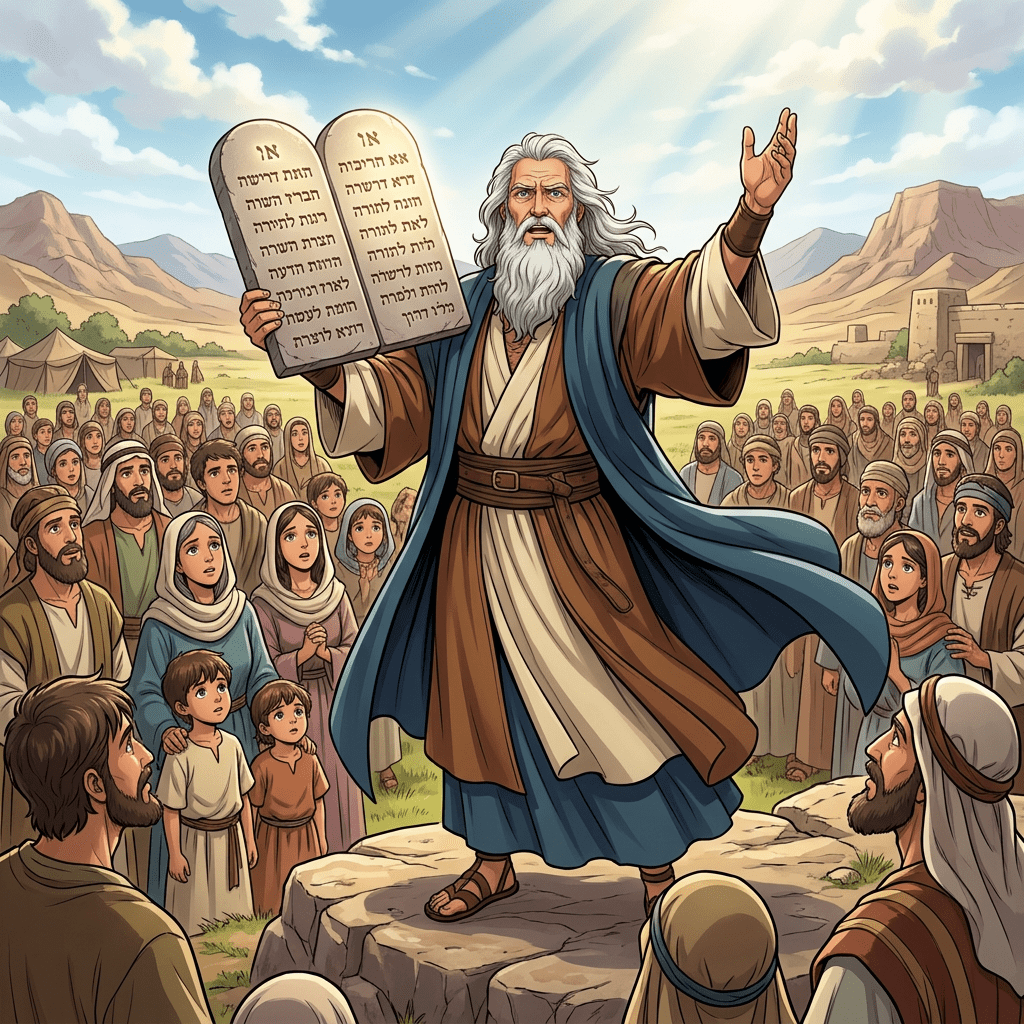
Lawmakers often provide a write-up when enacting a new law. These introductions can include anything from a legislative history to an explanation of the bill’s intent. In the Torah Portion Va’etchanan, Moses introduces the Ten Commandments to all of Israel. In doing so, he imparts essential information for grasping the biblical understanding of the Decalogue.Continue reading “The Introduction to The Ten Commandments: Va’etchanan”
Second Law, Second Audience: D’varim
The Book of Deuteronomy begins with the Torah Portion D’varim. In D’varim, Moses begins his final speech on the other side of the Jordan River to all of Israel. Deuteronomy 1:1. The Book of Deuteronomy stands out from the rest of the Pentateuch. Scholars and theologians focus often address Deuteronomy’s significance as either second lawContinue reading “Second Law, Second Audience: D’varim”
The Perfect Swear? Vayechi’s Haftarah Ten Commandments’ Moment

Torah Reading Services include a supplemental scriptural read called the Haftarah. This canonized Extra-Pentateuchal reading was selected as it bared some relationship to the particular weekly or holiday Torah Portion. By Extra-Pentaeuchal, it means that the reading comes from other parts of the Hebrew Bible- either Prophets or Writings. Preliminary Notes With this being thisContinue reading “The Perfect Swear? Vayechi’s Haftarah Ten Commandments’ Moment”
A Legend Preserving a Legacy? V’Zot HaBerachah: A Ten Commandments’ Moment

Barred entry into the Promised Land, Moses is buried on a mountaintop. The end? The end, for the Torah Portion V’Zot HaBerachah, actually marks the beginning. In their infancy, legacies are fragile. Upon one’s death, their legacy becomes detached from the person. They no longer are able to control what they once controlled. The seedContinue reading “A Legend Preserving a Legacy? V’Zot HaBerachah: A Ten Commandments’ Moment”
Peak Justice or Cognitive Disaster? Vayelech
Ignorance of the law is no excuse While a Torah Portion Vayelech Commandment is symbolically magnificent, in modernity it presents as a pedagogical disaster. The utopian directive, on paper, delivers knowledge of the law to the entire populace. From a cognitive science perspective, however, the commandment is a failure. Can this problematic teaching methodology explainContinue reading “Peak Justice or Cognitive Disaster? Vayelech”
Nitzavim: Of Rabbit Holes & Rashi: A Ten Commandments’ Moment

The Torah Portion Nitzavim starts with a beautiful passage advancing the Ten Commandments’ collective nature. This post explores whether the collective theme’s passage contains a hidden message. The Nitzavim passage is as follows: “You’re standing today, all of you, in front of the Lord, your God- your heads, your tribes, your elders, and your officers,Continue reading “Nitzavim: Of Rabbit Holes & Rashi: A Ten Commandments’ Moment”
The Chosen People? Ki Tavo’s Ten Commandments’ Moment

“The Lord said to Samuel, “Listen to the voice of the people in all that they say to you, for it is not you whom they have rejected, but it is Me whom they have rejected from reigning over them….. So are they doing to you, as well. And now, heed their voice, but beContinue reading “The Chosen People? Ki Tavo’s Ten Commandments’ Moment”
 The Ten Commandments Project