Who will live, and Who will die
Yom Kippur’s Torah Portion is the goat on randomness. What should we take away from the universe filled with uncertainty?
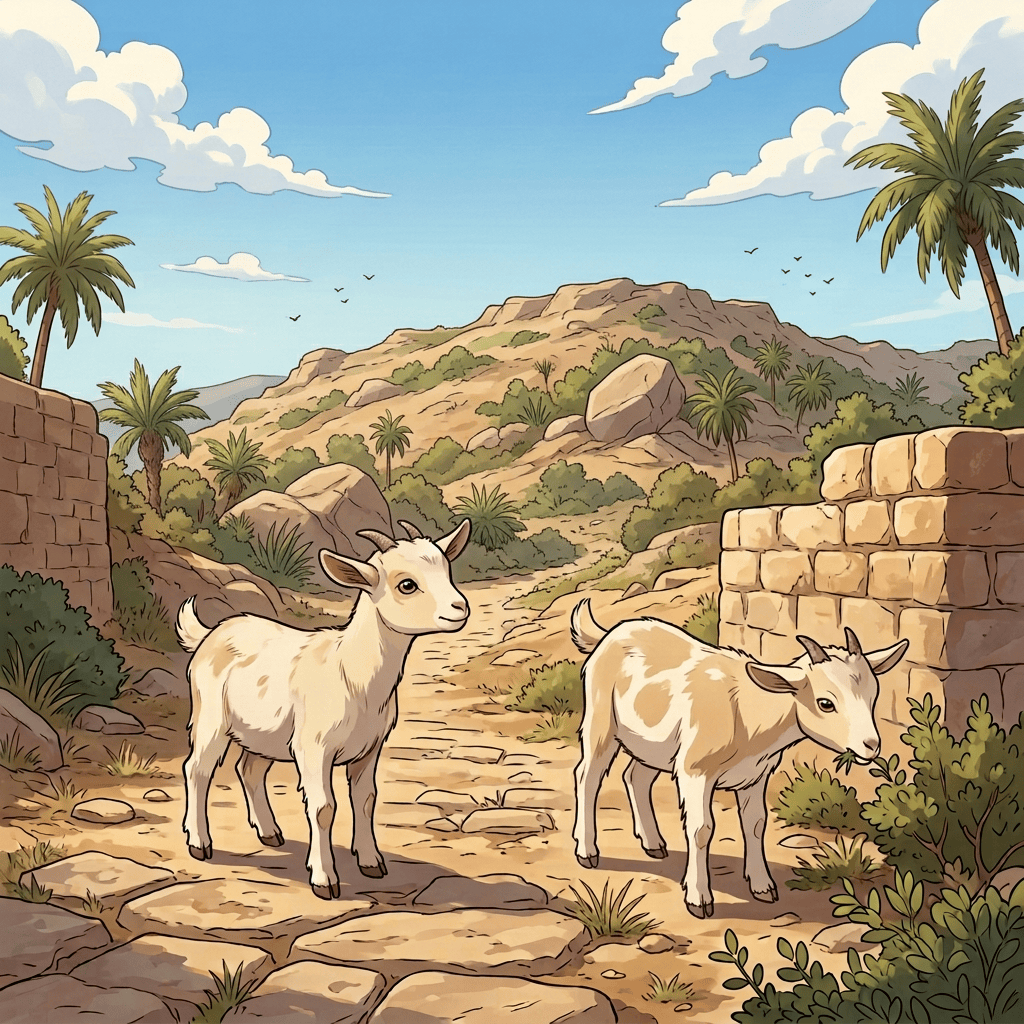
Yom Kippur- the Day of Atonement- is a moment in which life’s uncertainty is brought to the forefront. It is done with the reading of one of the Torah’s most famous passages: “And he[Aaron] shall take two goats and stand them in front of the Lord, at the entrance of the Tent of Meeting. And Aaron shall cast lots on the two goats, one lot for the Lord and one lot for Azazel. And Aaron shall bring forward the goat on which the lot for the Lord arose and he shall make it a sin offering. And the goat on which the lot for Azazel arose shall be stood alive in front of the Lord to make atonement over it, to let it go to Azazel, into the wilderness.” Leviticus 16:7-10.
Beyond this passage being the etymology for the term scapegoat, the passage paints a broad stroke upon inevitability. Despite the goats’ differing pathways, both will end up in the same place; they will die.
Time is the only difference. One goat’s fate is time certain; there will be a date for its sacrificial offering. The other goat was to eventually die in the wilderness.
The surviving goat, however, would have a burden. The goat carried with it all of the confessions of crimes, offenses, and sins of the Children of Israel. It was the High Priest Aaron who would figuratively put the Children of Israel’s confessions into the goat’s head by utterance. Leviticus 16:21. With that, although the goat remained alive, its life carried baggage; an entire community’s confessions.
The Journey Through Life
Mortality is also Yom Kippur topic. In the holiday prayer Unetannah Tokef, the line: “Who will live, and Who will die” is recited. The phrase ignores death’s certainty. Everyone will die; the real question is “when?” With randomness, it can happen at any moment. As such, the follow up question is “how should one live their life until when happens?”
The journey through life is lighter without baggage. Crimes, offenses and sins are emotional baggage. They hold us down. People’s behavior is altered by the past. One might avoid saying “hello” to someone due to a past unresolved grievance; they might not attend a party knowing that individual is going to be in attendence.
The annual holiday season of renewal and atonement present as an opportunity for individuals and the community to take the time to address and unpack their past deeds . In doing so, life’s journey can continue with less baggage; a lightened load.
With the holiday season, there is also the opportunity for growth. Even adults through experience and reflection can continue to gain insights to make their journey both with ease and enjoyable. The same is with maintaining morals and a moral code throughout the year. Sometimes, the season gives the courage for someone to act; to take the first step.
Beyond the individual experience, there is the appreciation that the annual journey through life is with others. A community plays a role in the atonement process. A community as well that is fraught with the same challenges for growth and fidelity to a moral code. We, as one is reminded at Yom Kippur, are not alone.
The randomness with the goats’ pathways reminds us that uncertainty is good cause to immediately act with our best behavior. In essence, unlike the goat sent to the wilderness, it is far better to journey through life without a head filled with admissions of crime, offenses and sin. Thus, expeditiously and consistently working on one’s behavior are High Holiday aspirations for the upcoming year.
Conclusion
The tale of the two goats, is starkly reminds congregants that life is both random and certain. This realization should be considered as motivation toward being on one’s best behavior and cherishing every moment. Every step in a life’s journey should be held precious.
Be well!!
Please like, follow, comment or share

