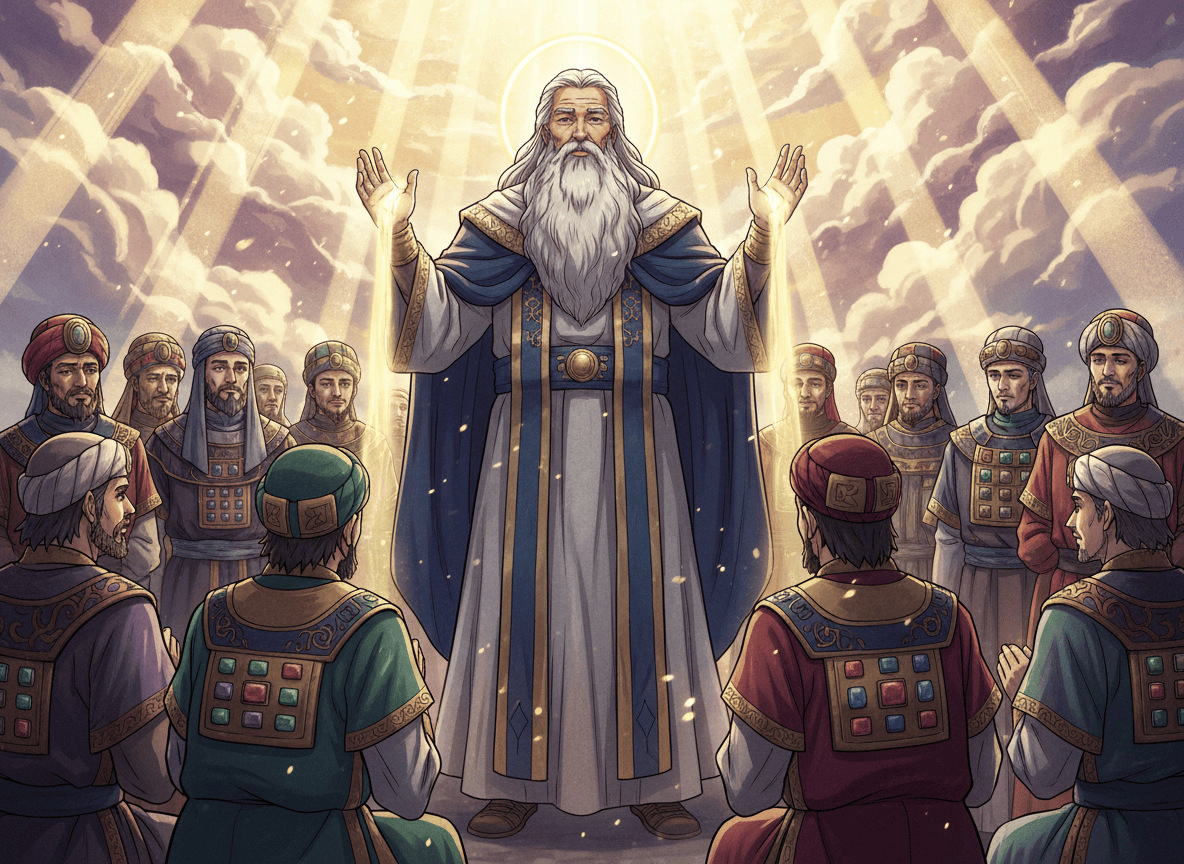
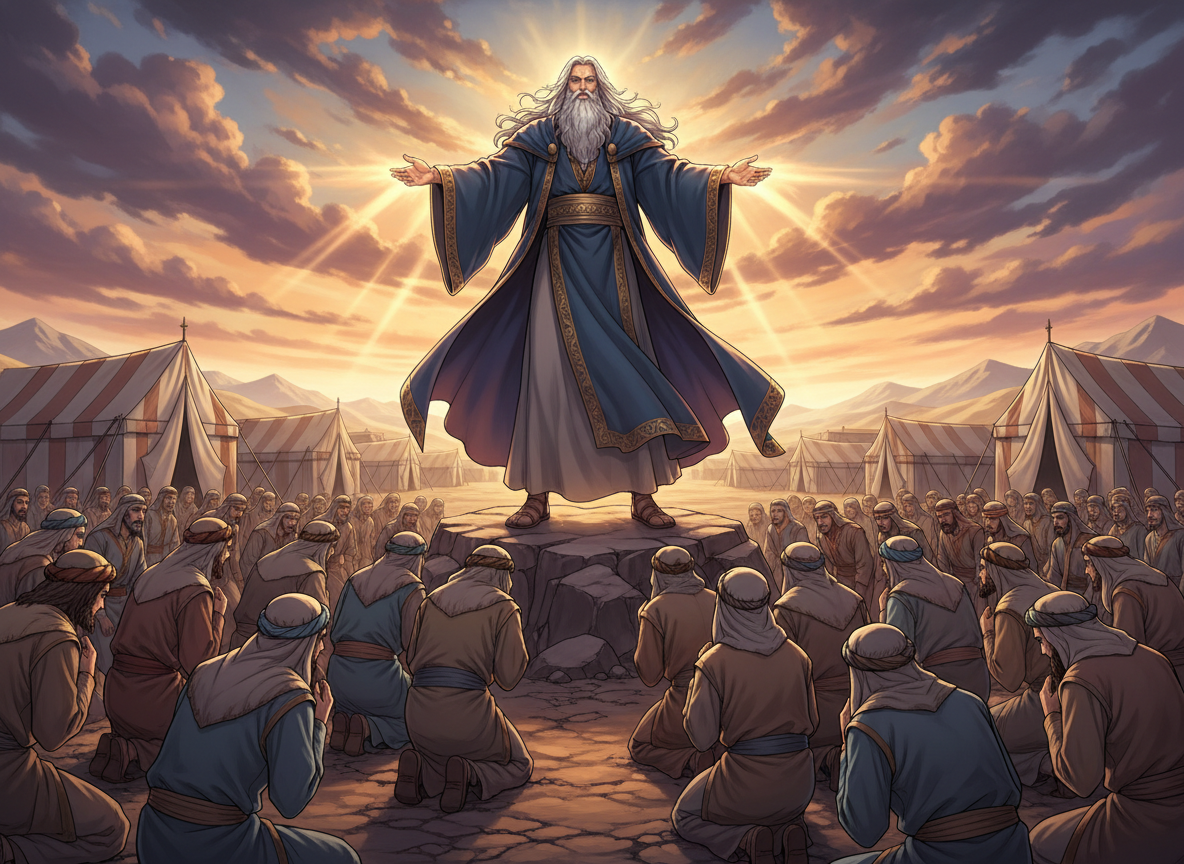
Before the Torah’s finale, Moses charged parents to educate their children. In the Torah’s final portion, V’zot Haberachah, Moses charges the Levites to educate the Israelite nation. In Moses’ blessing to the tribe, he assigns them a special assignment. Forever more, the Levites were tasked to provide covenantal education to the nation.
This tasking raises a question: is it wise for a society to assign one particular group such an obligation?
In this instance, the answer is yes. Scripture records that the Levites succeeded in fulfilling the obligation enumerated within Moses’ blessing.
To appreciate what transpired, one must begin with Moses’ blessing.
V’Zot Haberachah
In V’zot Haberachah, Moses provides blessings to all of the tribes. For the Levites’ blessing, he indicates: “They’ll [the Levites] teach your judgments to Jacob and your instruction to Israel.” Deuteronomy 33:10.
This obligation was not without precedent. The Levities previously were assigned special tasks.
The Tribe Set-Aside
Prior to the blessing, the Levite tribe was already distinguished.
In Numbers, there is the passage: “And the Lord spoke to Moses, saying, [b]ring forward the tribe of Levi and stand it in front of Aaron, the priest, so they will attend to him.” Numbers 3:5-6. The Lord further indicated that “I have taken the Levites from among the Children of Israel in place of every firstborn, the first birth of the womb, from the Children of Israel. And the Levites shall be mine.” Numbers 3:11.
In addition to their responsibilities to the cultic practice, there were assigned future responsibilities with respect to national governance.
Education Foundation
A Deuteronomy provision allowed for the Israelite nation to elect a monarchy as their form of governance. In this instance, the Levites were tasked a role with respect to the monarch. They were to accompany the king as the monarch wrote out a copy of the Torah. Deuteronomy 17:18-20. Presumably, this involved some educational role in assisting the king on this task.
With these Torah events addressed, the Levites played an educational role in two historical moments recorded in other parts of scripture: one, at the time of King Josiah’s reign and at the other at the time of the Judean’s return from exile.
King Josiah
During King Josiah’s reign, a book was discovered in the First Temple. This monumental discovery was believed to be the Book of Deuteronomy. Within the story, it is Hilkiah the Kohen who brings the Scroll of the Torah to King Josiah. 2 Kings 22:8-10. [Note: Kohens are a subsection of the Levite tribe.] As a result of this discovery, and the King’s education on the text, a period of religious reformation occurred within the Judean Kingdom.
The other Levite scriptural moment came after the Judean nation fell.
Return From Exile
Approximately 70 years after the First Temple’s destruction, Cyrus the Great, the Persian King, allowed the Judeans return to rebuild the Temple.
With the return from exile, Ezra was reported to bring the Torah to Jerusalem. At a meeting at the Water Gate, scripture notes that Ezra read the Torah before all those who assembled. It is noted that “the Levites who helped [the people] who gathered understand the Torah.” Nehemiah: 8:7-8. Given the exile’s length of approximately 70 years, Hebrew language fluency may have presented as a barrier in comprehension. Also, the text’s complexity would have also presented as a problem.
Conclusion
The Portion V’zot Haberachah describes Moses’ charging upon the Levites to be the nation’s educators. Scripture reveals that Moses’ blessing became a reality in that the Levites played a major role in educating the monarchy and the populace.
This charge’s concept is one of societal debate. A particular societal group of people being dedicated to a task is disconcerting in modernity. In free societies, individuals are told that their opportunities are unlimited; they can achieve any position within society. Thus, a group of people being relegated to a particular vocation is considered something of the past. While this argument is correct, it should be noted that many families in modernity choose widespread involvement in particular vocations or trades. For instance, there are military families, medical profession families and teaching families. As such, the benefits and wisdom of this ancient directive certainly warrant discussion and debate.
Be well!!
Please like, follow, comment or share.
AI Disclosure: All of the writing is done non-AI. AI is used to creat the metadata. AI searches are done to locate particular citations. The citations are then reviewed for correctness. AI is used to generate the graphic image. AI is used to generate feedback on the original piece for editing purposes.


One thought on “V’zot Haberachah’s Ten Commandments’ Moment”