
You shall not bring up the name of the Lord, your God, for a falsehood, because the Lord will not make one innocent who will bring up His name for a falsehood. Exodus 20:7 The Torah Portion Balak has this assertion: “Because I know that whoever you’ll bless will be blessed, and whoever you’ll curseContinue reading “Balak’s Ten Commandments’ Moment”
Category Archives: torah
The Leadership Trilogy Ends With Four Takeaways: Chukat
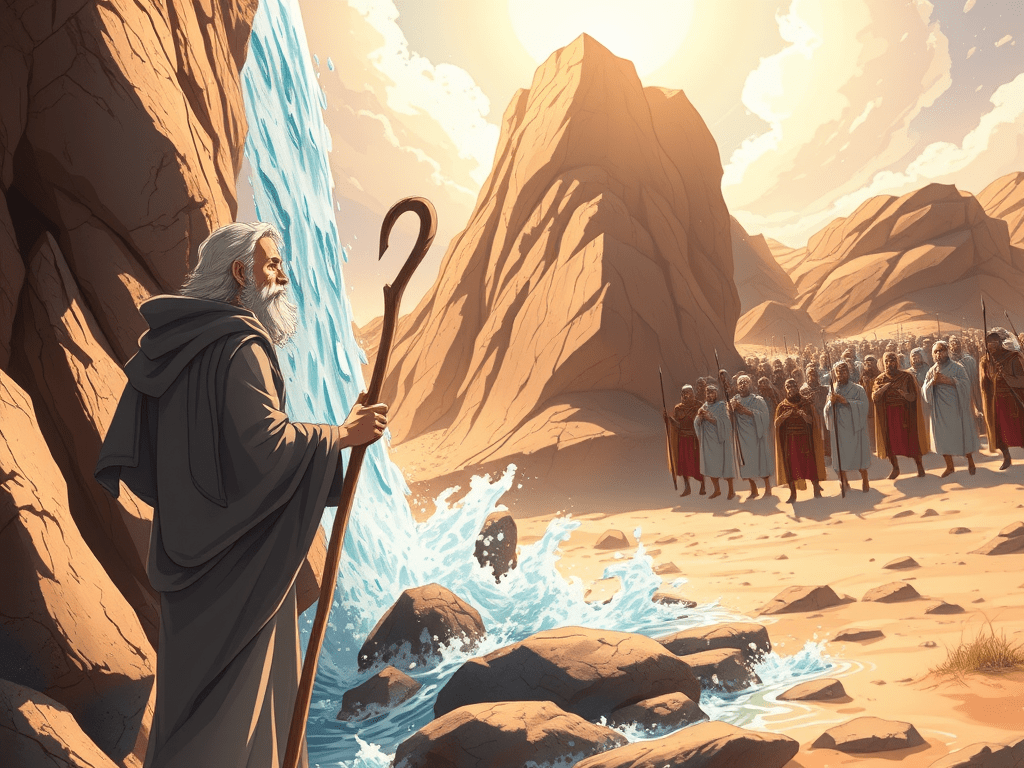
The apex of the Torah’s Leadership theme occurs with Moses caught in the Almighty’s crosshairs. The Portion Chukat concludes a three-part leadership masterclass. The trilogy includes the two preceding portions- Shelach and Korah. Those addressed a lower-level leadership crisis and a mid-level-leadership challenge respectively. The third masterclass installment addresses a chief executive fail. This postContinue reading “The Leadership Trilogy Ends With Four Takeaways: Chukat”
The Art of the Theme: Korah

You have so much! Because all of the congregation, all of them, are holy, and the Lord is among them. And why do you raise yourselves over the Lord’s community?” Korah speaking to Moses and Aaron Numbers 16:3 Social hierarchy is not exclusive to humans. The animal kingdom has a variety of species that areContinue reading “The Art of the Theme: Korah”
Separation of Power? Bechaalotecha

Institution powers “will find a way. ” Dr. Ian Malcolm’s “life finds a way” from Jurassic Park rings true when political forces encroach upon the established powers. Professionally, I have witnessed existentially threatened institutions both re-invent and assert themselves. The results were shockingly successful. “Finding a way” is so powerful that even the dinosaurs foundContinue reading “Separation of Power? Bechaalotecha”
The Vow: Naso

The Torah Portion Naso is a springboard to many questions. Why have Nazarites? Why create a social status involving abstinence? Was there an unmentioned purpose for having Nazarite status? Has this concept continued through modernity? Perhaps, the most provocative Nazarite status question is “whether something can be simultaneously bad and good?” The Portion Naso laysContinue reading “The Vow: Naso”
The Author’s Mind: A Shavuot Thought
The Shavuot Holiday celebrates the receipt of the Torah at Mt. Sinai. Shavuot also offers a moment to reflect upon scripture’s authorship. While Biblical Scholars focus on the textual sources, an analysis of the author’s mindset brings appreciation of the book’s utility. Writing Great writing connects to the audience. How can a text over 2000Continue reading “The Author’s Mind: A Shavuot Thought”
Bamidbar: Superorganism?

To understand the Israelite class structure, the concept of a superorganism should be considered. A superorganism is neither “super” nor is it a mere “organism,” rather, it is the recognition that a species or group can depart from individuality. Superorganisms are societies which function as an organic whole. A biological concept tied to it isContinue reading “Bamidbar: Superorganism?”
Behar-Bechukotai: The Good Life?

Why do people advocate the Ten Commandments to solve societal woes? A passage from the Torah Portion Behar-Bechukotai explains. “And you shall do my laws and observe my judgments and do them, so you will live on the land in security.” Leviticus 25:18. It is about having a good life. Decalogue compliance arguably includes theContinue reading “Behar-Bechukotai: The Good Life?”
Emor: The Big Message?
“All Animals are created equal, but some animals are more equal than others.” George Orwell In the Torah, death penalties stand out. Seemingly slight offenses, i.e. gathering wood on the Sabbath, Numbers 15:32-36, have been subject to capital punishment. In these instances which include the severe sanction, is Torah actually intending to send a biggerContinue reading “Emor: The Big Message?”
Acharei-Mot Kidushim: Of Holiness

While the Torah Portion Acharei-Mot Kidushim contains large parts of the Ten Commandments, it differs from the Ten Commandments. Leviticus 19:2 commands that “You shall be holy, because I, the Lord, your God, am holy.” In contrast, the Decalogue’s first mention of holiness pertains to the Sabbath. In making this assertion, the Tetragrammaton, the fourContinue reading “Acharei-Mot Kidushim: Of Holiness”
 The Ten Commandments Project