
Since no one wants to either read or edit my work, I do it myself.
It is a two-step process; scour the work for corrections and then run the post through the Jetpak AI feedback for recommendations. Rinse and repeat until a clean essay emerges.
Editing was better in the past was better.
WordPress’ writing style grade function helped. The academic scoring of work was telling. As the post got tighter, the grade level would rise. Rough drafts often started at a 6th or 7th grade level and rose to an 11th or 12th level. This was a great tool to use until WordPress removed it from the platform.
Without the grader, I still use another routine for editing. I track the number of revisions. The WordPress program counts them. As of writing this particular sentence, I am on my twenty-fourth revision of this post.
Once my revisions get into the twenties, it signals that the essay is becoming postable.
After awhile, however, my spidey sense took hold. My comfort with 25 edits became a Yogi Berra moment; deva vu all over again. Racking my brain, I took the fork in the road to the realization that revision numbers stopped at 25. I was never going to hit 26!
This crime took away a rhyme. How can I fix without 26. Despite our technology that can likely count to infinity and beyond, there was a 26 problem.
Was 26 or more revisions the sign of the apocalypse? Does it trigger Sky Net and the rise of the machines? Or, did WordPress think my human spirit going to be crushed if I hit 26? Doesn’t WordPress know that writers are masochistic? Most would want revision counts of 27…28…or perhaps…29.
As a rational person, I am rather insulted. The deception is not only unnecessary, it is maddening. It raises questions as to whether computing is honest. This was my July moment. Postal!
To maintain my humanity, I am getting my 26. In my mind, I will have my 26. Once I reach 25, I am going to do one more revision. I am delivering you 26!
Below was July’s offerings. The Torah reading schedule moving into the Book of Deuteronomy provided important for content. The Torah’s last book is special. It plays a huge role in secular scholarship as well as ancient Israelite politics..
July’s Offerings
July’s first post is interesting. The Bible character Phinehas’ elevation is worthy of study. He would become the inspiration for a post-biblical event that you all know. Take a spin as to what it was? It was an enlightening (for eight days) moment!

Phinehas: The Torah’s Executive MBA Program
________________________________________
The prohibition from using the Lord’s name in vain from the Commandments is really concerned about swearing and oaths. This portion is another reference to the fact that swearing and oaths were valued in antiquity.

Matot’s Ten Commandments’ Moment
________________________________________
For the secular study of the Hebrew Bible, the Book of Deuteronomy plays a large role in scholarship. In essence, Deuteronomistic thought presents as something distinct.
In essence, it is retelling and recapping of the Israelite narrative. In doing so, it is reshaped and refashioned. “Who exactly was the audience for Deuteronomy?” is the question.

Second Law, Second Audience: D’varim
________________________________________
As a practicing trial lawyer, figuring out whether people are being truthful is a vocational skill that can always be sharpened. Best-Selling Author Malcolm Gladwell’s insights are quite interesting.

Talking to Strangers: The Truth Default
________________________________________
In Deuteronomy, Moses’ speech reflecting upon the Ten Commandment is insightful. As much as there is the Ten Commandments, there is also the background story that must be appreciated.

The Introduction to The Ten Commandments: Va’etchanan
________________________________________
Biblical Literacy moments is a feature I have recently added. Who doesn’t want to know about the saying “Man does not live on bread alone”? It is a true classic often cited.

A Biblical Literacy Moment: Deuteronomy 8:3
________________________________________
To tackle Deuteronomy subjects, I purchased some of Moshe Weinfeld’s works. Given that he is a Deuteronomistic thought expert, I believed his materials would make a great reference and source for material. One gem from his works was that he made his own unique English translation of the Ten Commandments.

Moshe’s Ten Commandments
________________________________________
Moses’ Deuteronomy speech explains God. The text is remarkable. It is perhaps this type of description that allowed for the Israelite God to dominate and become monotheism’s Universal God. This description was elaborated upon in the Book of Psalms.
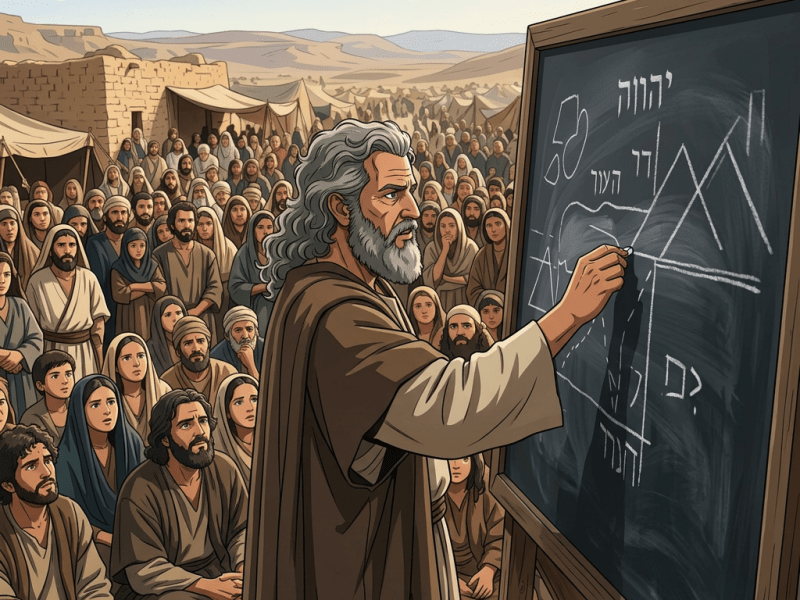
Who Is He? Definitions: Eikev: A Ten Commandments’ Moment
Conclusion
The fear of offending to a program must be counterbalanced versus creating a falsehood. Rigging numbers undermines the program’s integrity. A writer receiving criticisms is part of the masochistic nature of writing. Improvement is never ending. Twenty-five revisions- fake or real- sometimes is not enough in the writing process. So, regardless of what the program says, like those who go to eleven, I will always take my craft to twenty-six!
Be well!!
Please like, follow, comment or share.

