The prophet’s role is revealed in the Torah Portion Shoftim. Moses evokes Mt. Sinai’s fireworks and the Ten Commandments to explain one of the prophet’s essential duties. With this, Moses also introduces a qualifying requirement for the position.
To appreciate Moses’ retelling of what transpired at Mt. Sinai, a reading of Exodus’ contemporaneous account is indicated.
The Ten Commandments Delivered In Real Time
While stone tablets are the most recognized media upon which the Decalogue was transmitted, there was also another transmission of the Decalogue. In a theophany, he spoke the Ten Commandments directly upon the Children of Israel. Exodus 20:1.
After the Decalogue was recited, the moment of interest takes place.
“And all the people were seeing the thunders and the flashes and the sound of the horn and the mountain smoking. And the people saw, and they moved and stood at a distance, and they said to Moses, ‘You speak with us so we may listen, but let God not speak with us or else we’ll die.'” Exodus 20:18-19.
In Shoftim, Moses referenced this particular event to explain the prophet’s role.
Moses’ Ten Commandments Recap
Moses, in explaining the prophet’s function, employs the Israelites’ Mt. Sinai request as the impetus.
Moses, in Shoftim, notes: “The Lord, your God, will raise up for you a prophet from among you, from your brothers like me. You shall listen to him– in accordance with everything that you asked from the Lord, your God, at Horeb (Sinai) in the day of the assembly, saying, ‘Let me not continue to hear the voice of the Lord, my God, and let me not see this big fire anymore, so I won’t die!'” Deuteronomy 18:15.
The Prophet’s Role and Definition
Give that passage, scripture indicates that divine communications and directions moving forward from Mt. Sinai (Horeb) were to be via a prophet. With the arrangement, there was the Israelites were to listen to these prophets. Additionally, being an Israelite was a prophetic eligibility requirement.
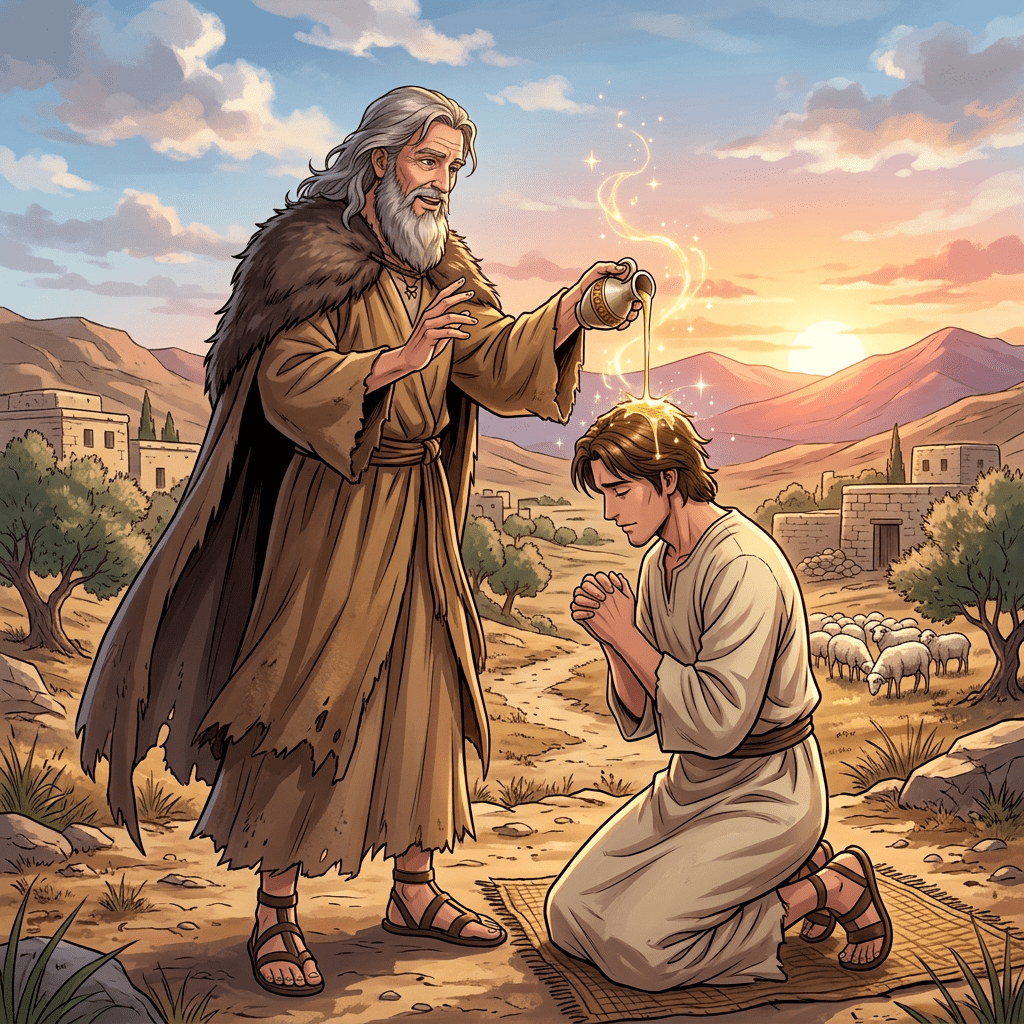
Hebrew Bible prophets differed from Moses. He was the only such prophet to introduce legal codes. Future prophets would play other roles. For instance, the prophet Elijah, was divine instructed to anoint Hazel king of Aram, Jehu king over Israel, and make Elisha his successor. See 1 Kings 19:15-16.
Conclusion
Essentially, the Shoftim passage explains the prophet’s role as well as adds a qualification. The prophet’s acting as an intermediary from the populace’s encounter with God at Mt. Sinai. Emotionally, the experience was too much for them to bare. As a result, they elected Moses to act as heir intermediary. Per Shoftim, this election was to continue post-Moses.
The concept of Israelite societal election was not unusual in scripture. A choice also took place to institute a monarchical government. See 1 Samuel 8:5.
Beyond prophetic dictates and background, this Shoftim passage reminds the readers of the theophany that took place with the Ten Commandments.
Be well!!
Please like, follow, comment or share

