
“… be watchful to do all the laws and the judgments that I’m putting in front of you today.” Deuteronomy 11:26 Before crossing the Jordan River into the Promised Land, the Children of Israel are reminded about their Divine Covenant. Laws and judgments are to be followed. In juxtaposition, the Patriarch Isaac is confined toContinue reading “Toldot’s Ten Commandments’ Moment”
Tag Archives: governance
Shoftim: A Ten Commandments’ Modification?

“Appoint a man over the congregation who will go out in front of them and who will come in in front of them and who will bring them out and who will bring them in, so the Lord’s congregation won’t be a sheep that don’t have a shepherd.” Numbers 27:16-17 The Torah Portion Shoftim illustratesContinue reading “Shoftim: A Ten Commandments’ Modification?”
Beyond The Ten Commandments: Devarim

A society cannot function on the Ten Commandments exclusively. This assertion should not be controversial. It was Moses, the Mt. Sinai Decalogue Deliverer, expressing this within in the Book of Deuteronomy. He confesses it within the Torah Portion Devarim. During the wilderness wandering, Moses grew to understand that leading a mixed multitude required more thanContinue reading “Beyond The Ten Commandments: Devarim”
The Secular Educational Value of The Ten Commandments
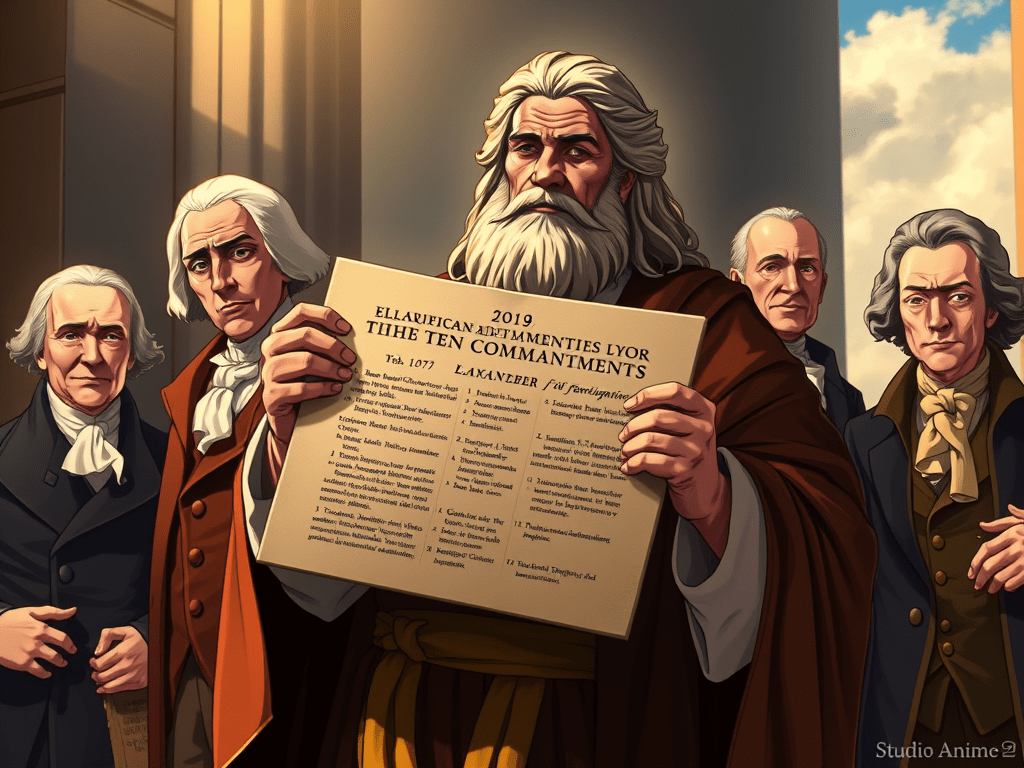
The Ten Commandments’ utility in secular educational is extensive. A discussion of the Decalogue’s historical value could constitute a semester’s long political science class. The Ten Commandments is one of the essential documents which has advanced both political philosophy and law. Understand modern governance would be replete without touching upon it. Prior to the TenContinue reading “The Secular Educational Value of The Ten Commandments”
 The Ten Commandments Project