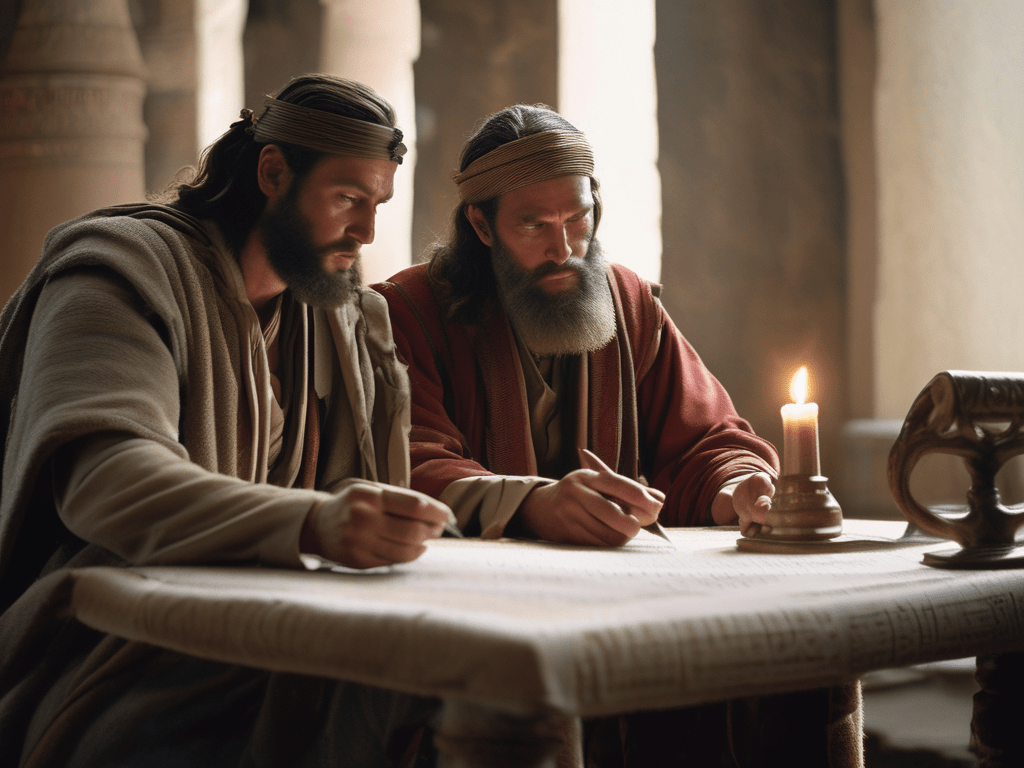
Unlike other prophetic books Jeremiah’s richly addresses the Ten Commandments. Understanding both the book’s content as well as the Prophet’s background allows one to appreciate Jeremiah’s significance. Upon review, it is easy to see that the Prophet is one of the most compelling post-Torah scriptural figures. While Jeremiah’s writings are outside of the Pentateuch, thereContinue reading “A Prophet’s Revealing Ten Commandments’ Moment”
Tag Archives: ten commandments
Going Postal: A Recap of Recent Writings

Like a plastic bag drifting through the wind, this Blog goes in many places and directions. Thus, I would like to address the recent ongoing themes. In current affairs, Louisiana’s Ten Commandments Law requiring the Decalogue’s posting in public school classrooms is a natural for the blog. While I am a lawyer who has wonContinue reading “Going Postal: A Recap of Recent Writings”
Is Preference Lost In Translation?

With Louisiana’s Ten Commandments’ Law requiring the posting in public school classrooms moving towards enaction, critics are raising concern that the language used for the Commandments’ sign constitutes a form of “choice”. In essence, the “choice” of words constituted a preference towards a particular religion or religious sect. “Choice”, in this instance, is nonsensical. TheContinue reading “Is Preference Lost In Translation?”
A Secular Education Lesson Plan for The Ten Commandments: Law vs. Moral Code

Originally, the Ten Commandments served as part of the Legal Code for the Israelite Nation. The Ten Commandments was an important legal document for the country. It was if the Declaration of Independence, the United States Constitution and other laws were placed all into one document. The Ten Commandments include matters involving morals and values.Continue reading “A Secular Education Lesson Plan for The Ten Commandments: Law vs. Moral Code”
The Ten Commandments in Secular Terms

With the most recent Ten Commandments’ skirmish across America, I wish to fire a volley on behalf of the Decalogue. The Ten Commandments is full of secular value. Thus, “open minded” people should take the time to read this argument. Public School Education, especially related to the notion of Government Studies, would benefit. This Blog,Continue reading “The Ten Commandments in Secular Terms”
Secular Value of the Ten Commandments: A Civic Lesson

Hating the Ten Commandments? This post is for you. Louisiana’s Ten Commandments’ law has brought out much criticism for the thought of allowing a religious document into public schools. This post makes the case, on a totally non-religious basis, as to why the Ten Commandments has much secular value. In fact, we don’t even needContinue reading “Secular Value of the Ten Commandments: A Civic Lesson”
Louisiana’s Ten Commandments Law
In the United States, the State of Louisiana just enacted a law for the public display of thee Ten Commandments in public school classrooms beginning in 2025. The backlash was immediate. There are those crying violations of the First Amendment Establishment Clause while the law supporters are contending that it is a foundational document forContinue reading “Louisiana’s Ten Commandments Law”
Of Good & Evil

A friend asked me “why are houses get broken into?” I explained to them that houses, by their design, are meant to be entered into. Likewise, I added, homes are meant to be a place for people to store their possessions. I said that since houses have doors and windows were built they are placesContinue reading “Of Good & Evil”
Shavuot: A Reflection On The Ultimate Ten Commandments’ Moment

This week, Shavuot is celebrated. It is a two day holiday. In conjunction with the festival commemorating the giving of the Ten Commandments and the Law, the famous Torah from Exodus is read. It contains the Ten Commandments. Beyond the Torah reading, the holiday is also celebrated with Torah study. While the Decalogue’s content, inContinue reading “Shavuot: A Reflection On The Ultimate Ten Commandments’ Moment”
Isaiah, On Purpose & Hope

What is your purpose? Without purpose, what is there? What is life to be? These inquiries often posed during troubling time. For some people, they often chase purpose. This is not a difficult endeavor. This is especially in the present time in which those advancing notions of purpose can keep talley via social media. BeyondContinue reading “Isaiah, On Purpose & Hope”
 The Ten Commandments Project